The dairy seesaw

download

The dairy seesaw

How dairy may lower or increase your risk for infertility and miscarriage

Dairy is a good source of calcium, protein, vitamin D and phosphorus, which is why pregnant women are often advised to include dairy in their diet. After all, these nutrients are essential for a baby’s developing bones, teeth, muscles, heart and nerves. However, some studies have shown that some dairy products can be good for you, while others can be bad. So before you reach for that glass of milk or bowl of ice cream, let’s weigh the pros and cons of dairy.

The Pros

According to an eight-year Harvard study involving around 18,000 women, the moderate consumption of high-fat dairy products like ice cream, whole milk, yogurt and cheese is considered fertility and pregnancy friendly. This is because whole milk contains a complete protein that is important for egg quality. Their findings showed that dairy could reduce the risk of anovulatory infertility by more than 50%. and lower the risk of miscarriage by 33%.

Meanwhile, another study by the Laboratory of Experimental Endocrinology, University of Crete, School of Medicine, Heraklion, Greece, has found that dairy may reduce the body’s unwanted immune response, which secretes antibodies that affect the fetus and can cause recurrent miscarriages.

The Cons

While the moderate intake of dairy is beneficial, the high consumption of milk has been linked to a decrease in fertility. This is because excess protein intake (more than 120 grams a day) can cause embryo implantation problems. In addition, women with dairy intolerance and allergies are more likely to miscarry.
However, many people are unaware that they are lactose intolerant. According to the Physicians Committee of Responsible Medicine, 75% of the world’s population is lactose intolerant. A study published by the European Journal of Obstetrics, Gynecology, and Reproductive Biology (2001) also found that eating butter and oil can double a woman’s risk for miscarriage.


What about low fat dairy?

It is known that full-fat dairy foods contain the female hormones estrogen and progesterone. But when fat is skimmed from the milk, the process removes these hormones and leaves behind male hormones or androgens, which impairs ovulation. The same Harvard study mentioned above found that low fat dairy can increase the risk of ovulatory infertility by 85%.

Milk and hormones

While we’re on the subject of hormones, it is important to note that because animal milk contains hormones, high intake of dairy may disrupt your own hormonal balance. Some of the fertility issues that can be associated with hormone imbalance are PCOS, Endometriosis and male infertility.

A study conducted by researchers from the Cancer Epidemiology Centre, The Cancer Council Victoria, Melbourne, Australia has found that women who eat high amounts of dairy can have 15% higher estrogen levels, which may influence circulating concentrations of estradiol. Estradiol is a form of estrogen that while is necessary for many processes in the body can also cause harm to pregnancy and unborn babies.

images

Milk and inflammation

In traditional Chinese medicine, dairy is believed to be ‘damp’ and cause inflammation, which hampers fertility and causes problems in getting pregnant. However, in Western medicine, several studies have been found that dairy can help reduce inflammation.

For example, researchers from the Department of Nutrition and Biochemistry, School of Public Health, Tehran University of Medical Sciences, Iran discovered that probiotic yogurt can lower one marker of inflammation by 29%.

A similar study by the Department of Nutrition Science-Dietetics, Harokopio University, Athens, Greece also identified an inverse association between dairy products consumption and levels of various inflammatory markers among healthy adults. They found that dairy lowers inflammatory markers by as much as 16%.

These findings are supported by another study by the Department of Nutrition, University of Tennessee, Knoxville, USA, which found that calcium and dairy consumption can reduce tissue oxidative and inflammatory stress.

From the findings above, we can conclude that the moderate consumption of whole dairy products is beneficial to fertility and pregnancy. However, if you’re feeling uncertain, don’t take the drastic step of cutting dairy out of your diet completely. Instead, speak to your fertility consultant about how much dairy you should be consuming.


错过黄金孕期, 后悔太晚- 星洲日报(新闻专题)

Sin Chew

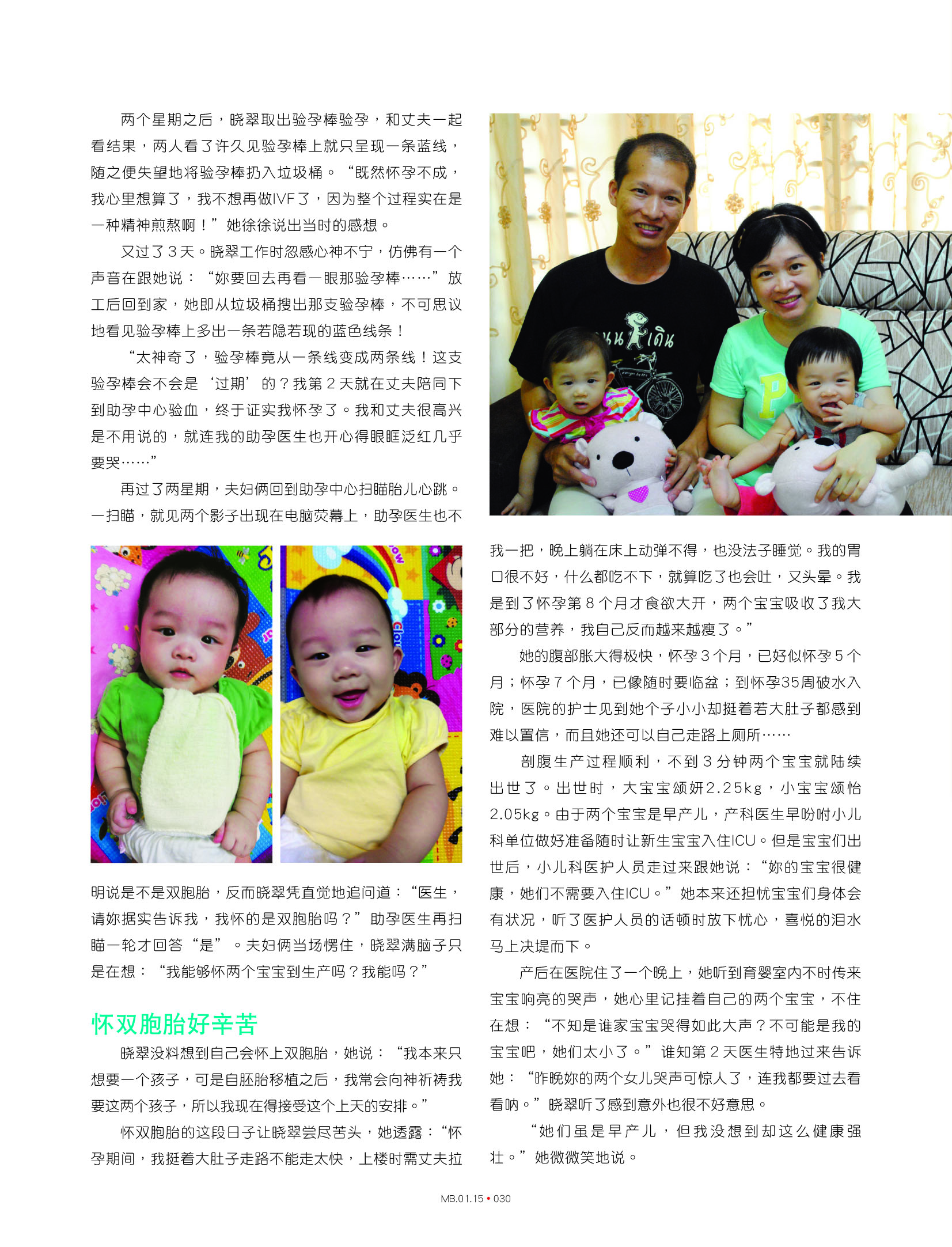
冷冻卵子保未来生机-光明良医

807cad50-878f-45a8-9f15-feddd4be469f

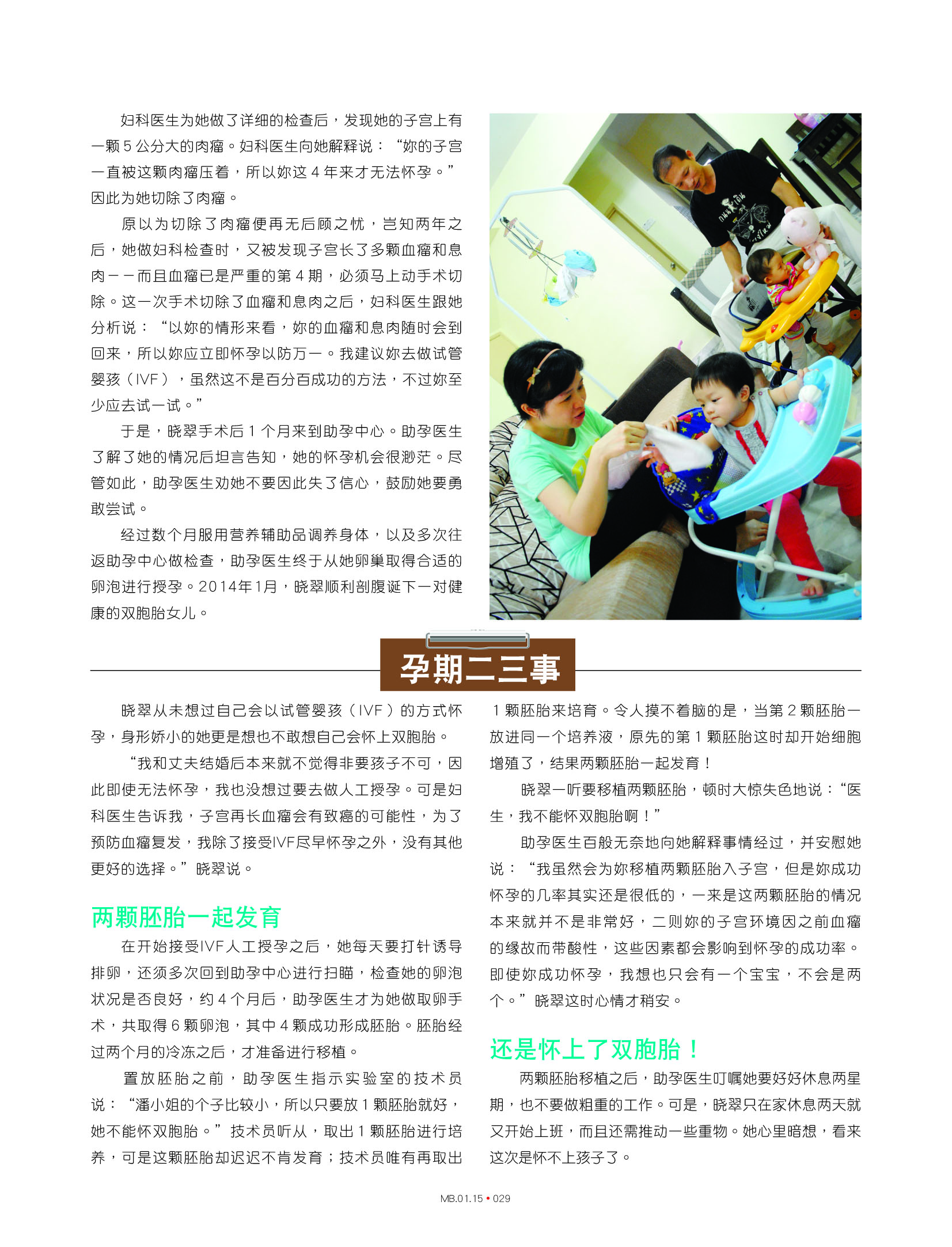
针灸提高试管活产率-风采杂志

article - Dr helena 0001.jpg-Acu

Our IVF Journey

One of the most important lesson that I have learnt from my mentor in IVF is that IVF is equivalent to an exam. The likelihood of passing an exam (aka. achieve a pregnancy) is increased if you are prepared for it. Half of the battle is won not during the battle itself but during the preparation for the battle.

As a seasoned student (I have been through many exams including my professional exams), I could not agree more. A famous Chinese military general, strategist and philosopher, Sun Tzi (600 B.C.), who authored the famous book ‘the Art of War’ had clearly illustrated and emphasized the importance of being ‘prepared’ as the secret of a victory.

Therefore, before you embark on your journey of IVF, would you join the wining team by preparing yourself for the battle?

unnamed

Our-Journey-Chinese-150605-back-590x834


The benefits of acupuncture in IVF

woman acupuncture at the back (small)


Restoring balance

The benefits of acupuncture in IVF

In recent years, acupuncture has become an increasingly popular complementary treatment for those suffering from infertility, especially women undergoing IVF treatment. But what’s behind the buzz and does it actually work? Let’s examine the known facts.

What is acupuncture?

Acupuncture is a form of traditional Chinese medicine (TCM) and healing method that has been used for thousands of years across the world to treat a variety of ailments. It involves the gentle insertion of thin, sterile needles that are inserted into the skin at strategic points of the body to provide stimulation.

According to TCM practitioners, there are more than 2,000 acupuncture points on the human body, which are connect to 14 major pathways or meridians. These meridians conduct “qi,” which is a form of energy or life force that is believed to regulate our spiritual, emotional, mental and physical balance. Poor health habits can disrupt the proper flow of qi, leading to various ailments, including pain and infertility.

 53

Benefits for those undergoing IVF

As acupuncture works on the principle of restoring balance, here’s how it can help:

Reduces stress – By lowering the levels of stress hormones released into the blood stream, acupuncture can help restore the body’s hormonal and neurochemical balance.

Improves blood flow – Stimulation at strategic points can increase blood flow to the ovaries and uterus, which increases chances for the egg to be implanted, nourished and carried to term.

Relieves aches – By alleviating existing aches and pains, acupuncture can provide further relief and stress reduction.

Relieves anxiety – By helping to treat conditions like anxiety and insomnia, which can have devastating long-term effects to wellbeing, acupuncture helps restore the body’s delicate balance.

Few side effects – Unlike some forms of Western treatment, which can be invasive and causes undesirable side effects, acupuncture has relatively few to no side effects other than causing bruising at the needle site.

Balance-Girl


Scientific research

Some experts in complementary medicine have cautioned that the positive effects of acupuncture may actually be due to a “placebo effect” that is caused by patients expecting acupuncture to work. To understand the phenomenon better, some scientific studies have been carried out to review the benefits of acupuncture in infertility treatments.

One study, jointly-conducted by the University of Maryland’s School of Medicine, Georgetown University School of Medicine, Washington and the University of Amsterdam, Holland, compared the results of needle acupuncture in women receiving IVF, against women who received fake treatments and no treatments at all.

The results were very positive, as according to the study, “IVF with acupuncture increased the odds of pregnancy by 65% (according to early evidence on ultrasound), increased the odds of ongoing pregnancy by 87% (according to ultrasound evidence of pregnancy at 12 weeks) and increased the odds of a live birth by 91% compared with IVF on its own.”

 acupuncture-preg

Conclusion

The researchers concluded that their results suggest that, “Acupuncture given with embryo transfer, improves rates of pregnancy and live birth in women who are undergoing in vitro fertilisation.” While their findings are significant and clinically relevant, the researchers consider them to be “somewhat preliminary” and call for further investigation in the link between pregnancy rates and the effect of acupuncture.

With these encouraging facts and figures, there is no wonder why more and more couples are choosing to include acupuncture in their infertility treatment routine. If you’re interested to find out more about using acupuncture as a complementary form of treatment, don’t hesitate to bring it up to your doctor.


A-CartoonDiscountAcu

Exercise and how it affects pregnancy rates


maxresdefault

Getting it just right

Exercise and how it affects pregnancy rates

We all know that staying physically active is beneficial to our overall health and wellbeing. But did you know that the right amount of exercise can also improve your chances of conceiving? Here’s why.

Firstly, regular exercise is known to help optimise the reproductive system. It does this by stimulating the endocrine glands, which releases hormones that help your eggs to grow. Secondly, exercise can enhance your metabolism and circulation, which in turn optimises your egg production.

Thirdly, exercise can help you manage or achieve an ideal body weight. Since being overweight or obese can impair fertility in both men and women, weight management is widely known and used to prevent and treat infertility. And lastly, regular workouts also help to relieve stress, which in itself can inhibit fertility.

While regular moderate exercise can have positive effects on fertility and conception, the opposite is true for vigorous exercise.  According to a 2009 study in Human Reproduction, and a Harvard study of elite athletes, vigorous exercise is linked to reduced fertility and pregnancy rates. Therefore, when it comes to exercise and fertility, it is possible to have too much of a good thing.

images


While there are no guidelines for women to follow when it comes to workout intensity for fertility, there is a way to strike a balance. Studies have shown that women who exercised moderately for at least 30 minutes a day can reduce their risk of infertility due to ovulation disorders. Evidence also suggests that moderate regular exercise can positively influence assisted reproductive technology (ART) outcomes. But what is the right amount of exercise?

If you’re already at your ideal weight, it is safe to stick to your regular routine, but keep it to half an hour maximum per day. Studies had shown that vigorous aerobic exercise of more than 4 hours per week reduces the chance of pregnancy in women going through IVF. If your cycle is still irregular and you haven’t conceived after a few months, you might want to cut back on the intensity of your workouts. However, if you’re underweight, focus on gaining weight and increasing your body fat to the recommended amount of over 12%. If you exercise regularly, cut back on the frequency and opt for a less vigorous routine.

Meanwhile, if you’re overweight, work on cutting down on your calories with healthy eating. You can also increase your exercise routine gradually to achieve your ideal weight. Lastly, if you’re undergoing fertility treatments, it is best to avoid high-impact exercises, as they can be detrimental to your ovaries, which have been enlarged by fertility drugs.

Still have doubts on where to begin? Before you step up your exercise routine, start by speaking to your doctor. If you’ve been having trouble conceiving, your doctor will need to assess your condition first. This includes your age, cycles, ovulatory status, the condition of your uterus and tubes, as well as your partner’s sperm. Once certain conditions have been identified or ruled out, your doctor will be able to advise you on whether the underlying cause may be too little or too much exercise.

images (1)


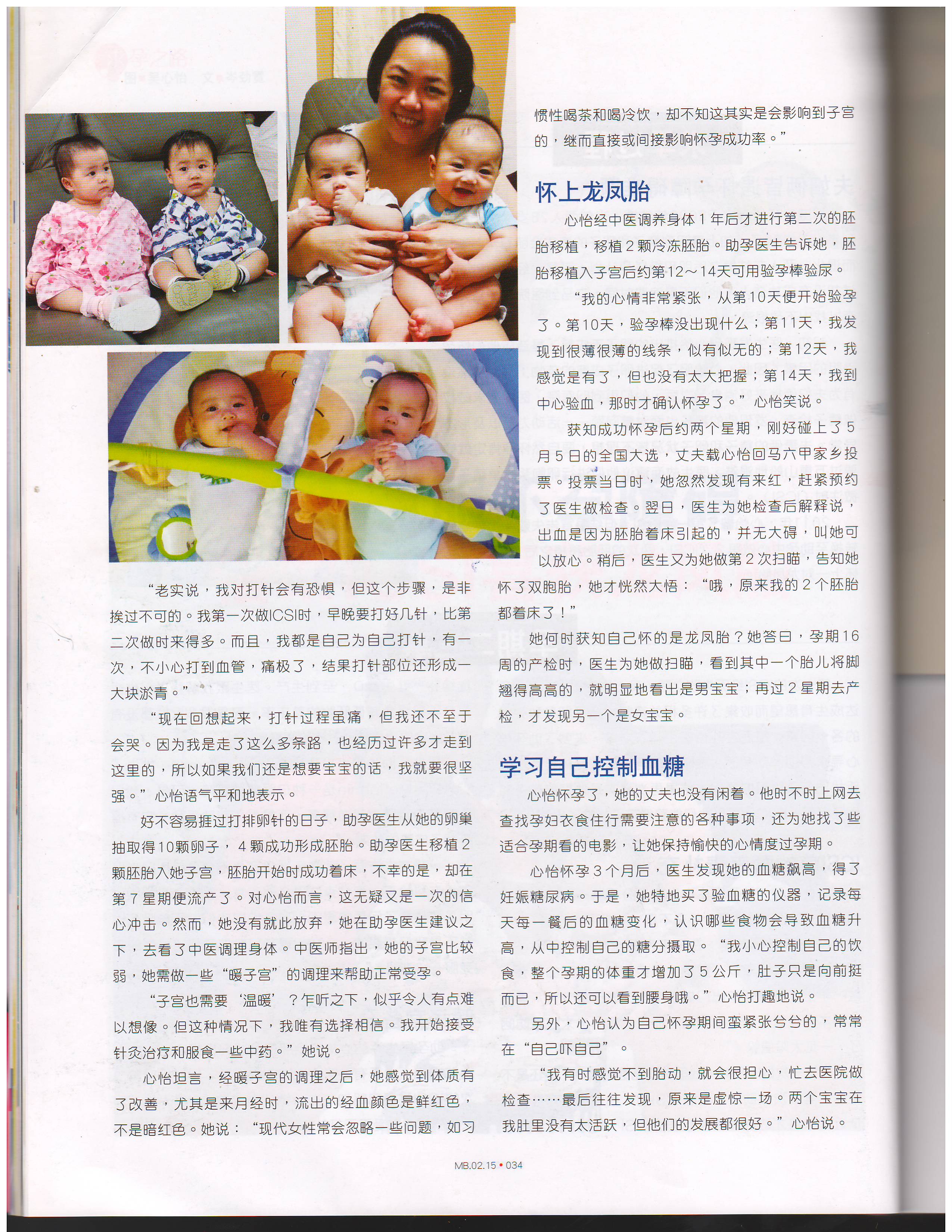
妈妈宝宝杂志 – 求孕之路6

MengSee-1 MengSee-2 MengSee-3 MengSee-4